
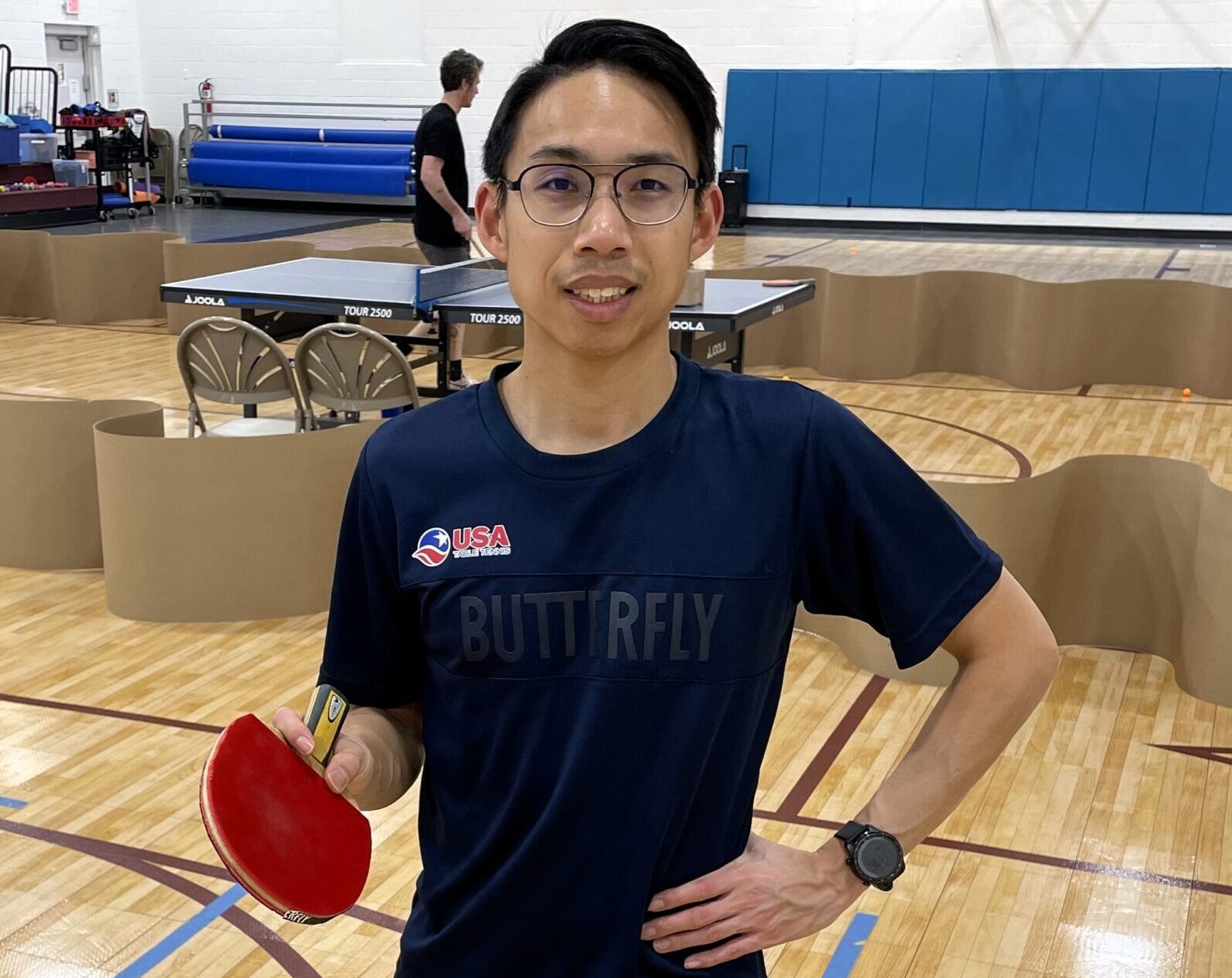
by Dr. Alan Chu, PhD, CMPC
The table tennis world watched in dismay last when both World #1 players withdrew from the WTT Finals in Hong Kong. Sun Yingsha, the women’s top seed, had to retire mid-match during her singles semi-final with an apparent ankle injury—the first time she’d ever withdrawn during a match in her career. She courageously returned for the mixed doubles final with partner Wang Chuqin, but they lost. The following day, Wang himself withdrew before his men’s singles semi-final, citing back pain and feeling unwell.
These back-to-back withdrawals sparked important conversations about tournament schedules and athlete well-being. For recreational and youth players, they also offer valuable lessons on the crucial role that the mental game plays in both injury prevention and recovery.
The Hidden Connection: Stress, Mental State, and Physical Injury
Many players don’t realize their mental states directly influence their injury risk. Research consistently shows that psychological stress increases levels of cortisol (e.g., a stress hormone), weakening the immune system and making athletes more susceptible to injuries and illness when that stress is prolonged. The relationship works both ways as physical pain creates mental stress. Understanding this connection is the first step toward protecting yourself during demanding tournaments.
This matters because tournaments, especially important ones like national team trials or longer tournaments like the US National, create exactly this kind of sustained stress. Your mind and body aren’t separate systems; they’re deeply connected. The good news is that you can use evidence-based mental strategies to prevent and manage injuries.
Strategy 1: Body Scanning (5 Minutes Regularly)
What it is: Body scanning is a simple mindfulness technique where you mentally check in with each part of your body, paying attention to sensations without judgment.
Why it works: Most injuries don’t appear suddenly—they build up over time. The problem is that during intense tournament preparation or competition, players often ignore early warning signs like tightness, minor aches, or unusual fatigue. Body scanning builds self-awareness so you catch problems early, before they become serious.
How to do it: Set aside 5 minutes each day during tournament preparation (ideally morning or before bed):
1. Sit or lie comfortably and close your eyes
2. Starting with your feet, mentally scan upward through your body: ankles, calves, knees, thighs, hips, lower back, upper back, shoulders, arms, wrists, hands, neck, and head
3. At each area, ask yourself: “How does this feel? Is there tension, soreness, or discomfort?”
4. Don’t judge what you find—just notice it
5. If you find tension, take three deep breaths while focusing on that area
For youth players: This practice is especially valuable because younger athletes often struggle to distinguish between normal effort and harmful strain. Teaching yourself this skill now builds a foundation for a long, healthy playing career.
Strategy 2: Stress Inoculation (the Week Before Tournament)
What it is: Stress inoculation is a technique where you deliberately expose yourself to controlled stressors in practice, so your mind and body learn to handle pressure without breaking down.
Why it works: When players go straight from low-pressure practice into high-stakes tournaments, the sudden stress spike overwhelms their system. This psychological overload translates into physical tension, poor recovery, compromised decision-making, and increased injury risk. By gradually increasing stress exposure, you build genuine resilience.
How to do it: Starting one week before your important tournament:
6-7 Days Before (Low stress practice):
· Practice normally but add 5-minute breathing exercises before and after
· This activates your parasympathetic nervous system and trains your body to stay calm under pressure
4-5 Days Before (Medium stress practice):
· Invite people to watch your practice matches and play practice matches as if you were at deuce or a match point in the tournament
· During each intense drill and practice match, implement your routine and notice where you hold tension in your body (see this mental training tip for more details on routines)
2-3 Days Before (High stress simulation):
· Play full practice matches in tournament conditions when physically tired—do a hard practice session and then play matches
· Focus on maintaining your breathing and body awareness even under fatigue
1 Day Before (Active rest):
· Light technical practice only
· Visualization: seeing yourself playing strong AND making smart decisions about your body’s needs (see this mental training tip for more details on visualization)
For youth players: When preparing for important junior tournaments, involve the coach and parents in creating these practice conditions. The goal isn’t to exhaust the body—it’s to teach the nervous system to handle pressure calmly.
Strategy 3: “Continue or Stop” Decision Framework (Before and During Competition)
What it is: A clear, pre-decided set of guidelines for determining whether to continue playing through discomfort or stop to prevent serious injury.
Why it works: In the heat of competition, especially during important tournaments, judgment is clouded by emotion, adrenaline, and competitive drive. Wang Chuqin and Sun Yingsha both had to make difficult decisions to withdraw—choices that likely felt devastating in the moment but protected their long-term careers. Having a framework decided in advance removes the emotional burden from these critical decisions.
How to do it: Before the tournament, write down the decision criteria, such as the following:
GREEN LIGHT (Continue playing):
· Muscle fatigue or tiredness (normal for competition)
· Mild soreness that doesn’t change your technique
· Action: Continue to play
YELLOW LIGHT (Proceed with caution, monitor closely):
· Mild pain that doesn’t worsen during play
· Unusual tightness that persists after warm-up
· Action: Do a body scan between games. Tell a coach. Decide to play match by match.
RED LIGHT (Stop immediately):
· Sharp, sudden pain that gets worse as the play continues
· Feeling dizzy, unwell, or extremely fatigued beyond normal competition tiredness
· Action: Withdraw from the match. Seek medical evaluation.
For youth players: Involve the coach and parents, making sure everyone agrees that long-term development is more important than any single result. This removes the pressure to be a “hero” by playing through injury.
Moral of the Story
Sun Yingsha’s withdrawal was the first in her career—an act of wisdom and a testament to how seriously she took the decision. By listening to her body, she protected her ability to compete later. The body is the most important piece of equipment in sport, while mental strategies train the mind to be its best advocate. Mental strategies can’t eliminate injury risks, but can build self-awareness and resilience to distinguish between pushing the limits and pushing PAST the limits.
—
Remember: Mental strategies complement but never replace proper medical evaluation and treatment. If you experience significant pain or injury, always consult with qualified healthcare professionals.


 Stay “In The Loop” with Butterfly professional table tennis equipment, table tennis news, table tennis technology, tournament results, and the next article featuring more equipment insights and professional recommendations. We Are Butterfly players, coaches, clubs and more.