

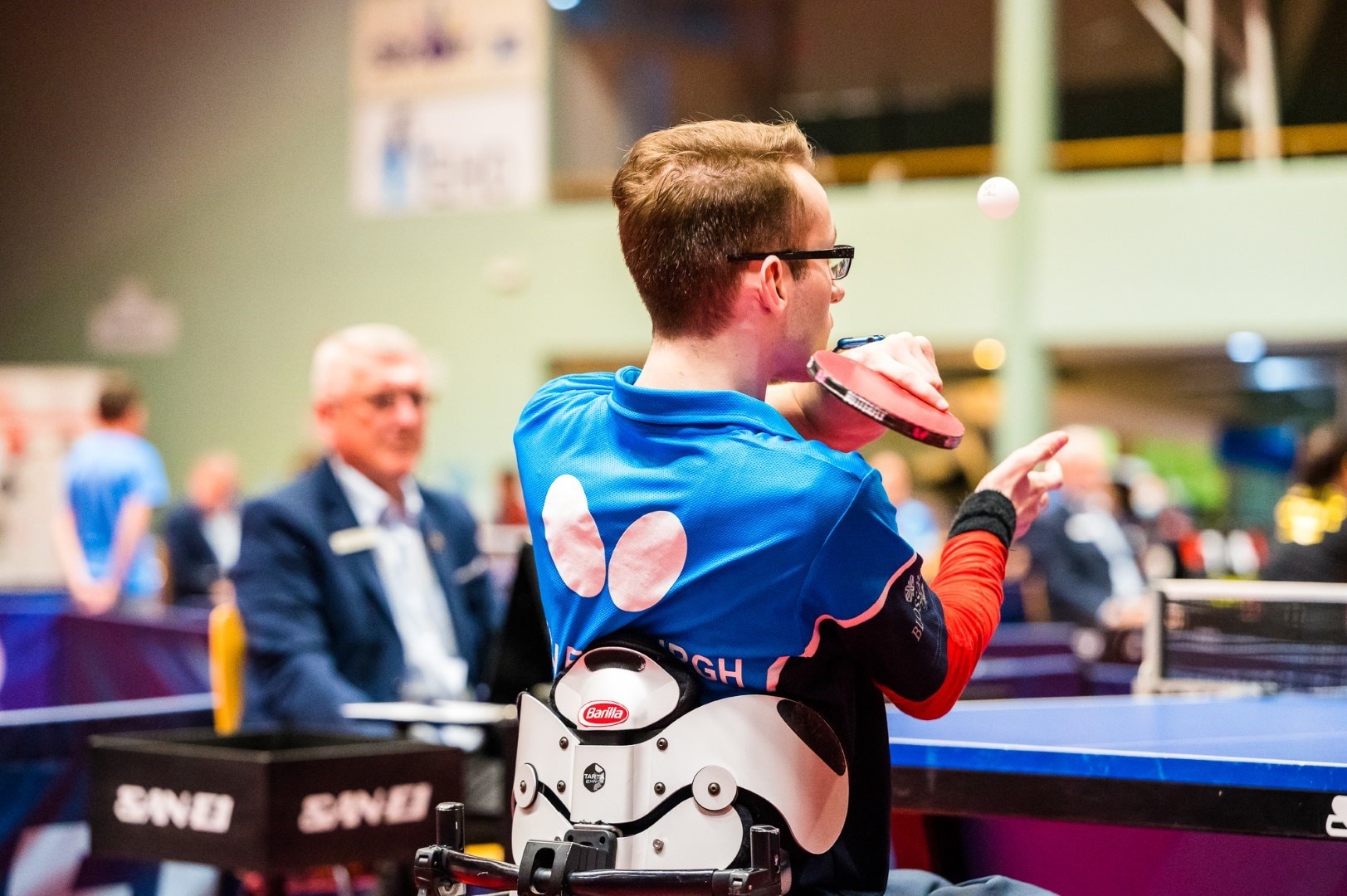
(by Jenson Van Emburgh)
There are many differences between wheelchair table tennis and traditional table tennis. The most apparent difference is in the service rules in which players must serve between the two corners and where short serves are permitted, but those short serves must continue forward. This article will dig deeper into the differences that are discussed less frequently such as the angle of the ball, the focus on precision over power, the importance of tactics, speed and timing.
The Angle of the Ball
In wheelchair table tennis, players have to hit the ball from a lower position compared to standing players. The angle at which the ball is struck and received is different due to the player’s seated position. This altered angle requires wheelchair table tennis players to really focus on their techniques and make adjustments as they must have precise ball control so they can effectively return shots. A wheelchair table tennis player also needs a little bit more spin in order to execute successful shots.
Less Importance on Power, More on Precision
While in traditional table tennis, players are able to generate power through their full range of motion and strength. In contrast, wheelchair table tennis relies less on power and more on precision and control. Wheelchair players only have upper body movement, and some players are limited further (with less motion or less strength). With these restrictions, the wheelchair game focuses on accurate ball placement, spins, and variations in shots. Players must focus more on where they are going to place the ball on the table. They also need to hone in on exploiting their opponent’s weaknesses, and creating opportunities for attack through well-placed and high quality shots.
Importance of Tactics
Even though tactics are important for traditional table tennis, wheelchair table tennis places an even stronger emphasis on tactics and strategy. Wheelchair players must carefully consider shot selection and angles – and they also have to consider where they position themselves at the table, as with limited mobility that positioning further affects shot selection and available angles. Effective tactics involve exploiting the opponent’s physical vulnerabilities, adapting to the opponent’s playing style, and keeping their opponents from playing their strengths. Wheelchair players often engage in tactical battles, coaches analyze the other players’ game during sets and then provide adjustments and instruction to their players between sets. The use of angled shots are very common in wheelchair table tennis due to players having very limited reach and can be very effective when well executed.
Timing and Speed Due to Proximity to the Table
Wheelchair players generally play closer to the table due to their seated position. This proximity significantly reduces the time available to react to shots. Wheelchair table tennis requires players to have quick reflexes and rapid decision-making as they have limited time to read what spins their opponents put on the ball, then adjust their racket position, and execute an appropriate shot. The close proximity to the table also intensifies the pressure during rallies, making split-second timing and precise placement crucial for success.
All in all, wheelchair table tennis has many differences to traditional table tennis than people realize. It demands a high level of precision, tactical strategies, and adaptability from players due to their unique physical challenges and by their seated positions. Mastering the nuances of ball angles, focusing on precision over power, employing effective tactics, and perfecting timing and speed are essential for high level wheelchair table tennis players.


 /* Constant Contact Universal Code */