
Mental Pitfalls: Switch to Winning In Your Mind
Courtesy of ButterflyMag
During time-outs, towel- or gamebreaks: Without a personal coach it can be very difficult to stay fully focused when a game is in danger of turning on you. Sometimes it’s hard even with a coach at your side.
So how do you switch to winning at this situation?

Professor Yoji Yoshizawa has some answers to that. He is an expert in this field and head of the department of sports medicine and psychology with the JTTA. His tasks include preparation of the Japanese national team for big events such as Olympics or the World Championships.
“Key words” and “Self talk”
Every player knows this: When the time is short, the situation pressing and so many thoughts are in your head, you sometimes lose focus and feel blocked too much to think about your game and the weakness of your opponent in order to still win the game.
Two techniques are identified in order to help in these situations:
“Key words” and “Self talk”

Keywords used as a mental switch
When there are too many mistakes made in a row, or the opponent experiences a strong phase in the match, we tend to lose the overview on the situation, lose the focus and the grip on the match. We even stop thinking about winning, and eventually stop trying to win.
The probability that the series of negative thoughts ends by itself is low. So what should we do if we cannot get a grip on “our game” again? How can we end the negative thinking and self-doubt?
“It’s too late now.” “I cannot receive that serve.” “I never lost to this opponent before – how embarrassing.” “If I lose this now, my team will lose for sure.”
Through a series of failed tries to play our game, our mentality has become so negative that our game has already gotten more passive and cautious before we realize what happened.
Subconsciously, we switched to a passive game of waiting for a mistake of the opponent. When we attack, it has become hasty and overzealous – we try to avoid rallies, looking for the quick point rather than relying on tactics.
With this action, we have made our opponent stronger and confirmed to him that he is winning. We have given him confidence and made it easier for him to attack and take risks.
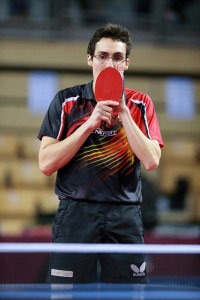
Manage and internalize key words with a set meaning.
A good method in dealing with this is the use of some “key words” that are specialized for these situations and are meant to remind us of our strengths and make us aware of our weaknesses.
Many players in fact do vocalize a lot of these concepts, but overuse can be exhausting mentally – and are mostly meant to vent our disappointment.
Vocalizing can be utterly useless when the words carry no coded meaning that would change our behavior. Every player should work up three or four words that have a coded meaning to make us aware of the situation and the need for change.
If we learn by heart not only these words, but rather short sentences that are symbolized by these words, we can overcome the mental block that kept us from playing our game and pave the way to be able to win again.
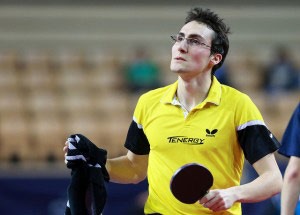
Content wise, these words can be individually different, because every player has different strengths and weaknesses. Some make decisions with their head, others with their gut, everyone should know what type he is.
Using the key words, we can remember the concept behind them and start to modify our behavior after a towel or game break.
Example: TACTICS!
Saying “Tactics”, can help us to run this programmed sequence:
“Is my long service even effective or do they help the opponent to attack first? Does the opponent have a weak side, that I haven’t realized yet? Does my topspin focus too much on speed? Have I tried to focus on spin instead? Are my usual point-scorers (Forehand topspin) being used – why not?”
Example: FOCUS!
Saying “Focus” can remind us of a mental trap, that we may have stepped into.
“Maybe my impatience and energy have resulted in being hasty! Do I run to pick up balls, or do I take time to walk? Count to 5 before making the next serve!”
Example: RELAX!
Everyone that gets overzealous easily can use this keyword to get back on course.
“Losing is not the worst thing in the world. It is only a challenge, no reason not to be relaxed and enjoy this tense situation.”
Example: “JULY 2013!”
We can also use the keyword to think about an event in the past, where we turned the tide of the match. Everyone has done that at least once, most likely even against a strong opponent in good form.
When we manage to memorize the moment of victory, how we played, how it felt and what our set of mind was, we can sort of mentally “save” this situation with the keyword “JULY 2013”. We can mentalize this situation something like this:
“Think of July 2013! I was trailing behind against a weaker opponent, but I was able to control my haste and anger and suddenly the situation felt not as bad. I felt more confident, took my time between rallies and only played shots I knew were possible. After the first few points, my legs felt lighter and the game was more fun. And I won. This is what I am doing now!”
Sometimes it may even help to not only memorize the personal statement but also to consciously vocalize it.
“Self-Talk” – be your own fan!
Our mental state of mind can be crucially important, even when we are being coached, and it can be as important as the right tactics or technique. To manage to turn a game in our favor requires a strong set of mind and belief in one’s own ability to win.
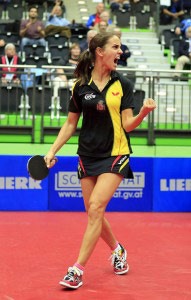
First we have to recognize our bad attitude and stop it instantly, it is the true enemy of success, because we then tend to ignore good advice. Let’s put statements like these onto the blacklist:
“Useless, no matter what I do” “That is just impossible!” “Only bad luck!” “Always edge!”
Step 2: Instead switch to the self-talk option with a mentalization that will help in that specific situation, because we start to relax and think about positive memories.
“It’s not bad luck, not a bad day and nobody works against me here. I will instead listen to the advice and fight for every point. Everyone believes in me and everyone watching will see me win!”
A “Yes, just like that!” can go a long way of helping us when we use it after we score a point the way our coach suggested. We slowly build up self confidence and motivate ourselves and simultaneously connect to our coach and the spectators.
This is the way to start winning and this is how we switch to winning – mentally. Even if it may not be enough to turn the game entirely, we will certainly feel better after the match and will have more self confidence for the next match.