

(by Dr. Alan Chu, PhD, CMPC)
In the 1990s, psychologist Anders Ericsson revolutionized our understanding of expertise. Through his landmark research on expert performers—from musicians to chess players to athletes—he discovered something surprising: what separates world-class performers isn’t innate talent or the quantity of practice, but the quality of practice.
Based on his research, Ericsson went on to write the book Peak: How to Master Almost Anything. Ericsson identified “deliberate practice” as the key ingredient, characterized by focused attention on specific weaknesses, immediate feedback, and systematic progression just beyond one’s comfort zone. This applies just as much to mental training as it does to physical technique.
Core Components of Deliberate Practice
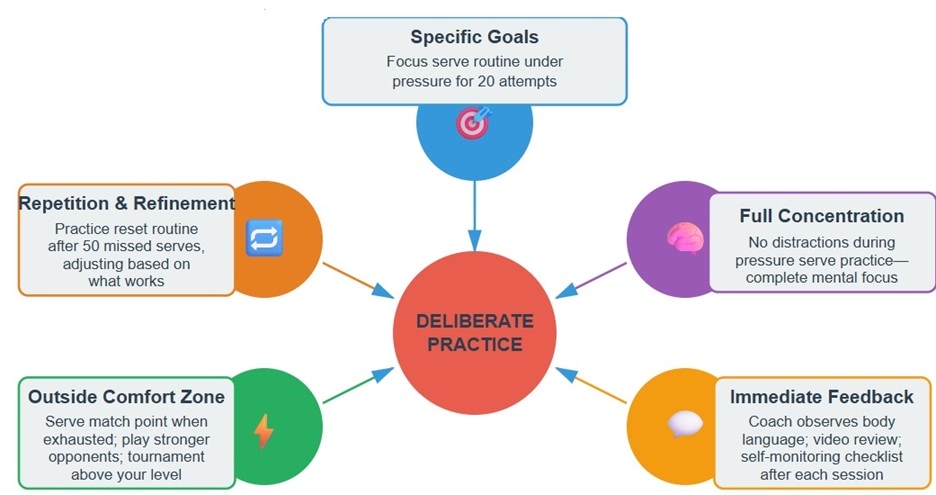
Ericsson’s framework identifies five essential elements that can help you transform ordinary practice into deliberate practice: Specific Goals, Full Concentration, Immediate Feedback (from yourself or others), Stepping Outside Your Comfort Zone, and Repetition and Refinement. This diagram below shows you some table tennis examples.
Applying Deliberate Practice to Your Physical and Mental Game
When we apply deliberate practice principles to mental training in table tennis, five relevant psychological tools stand out for every player to practice achieving their peak performance.
- Set Process-Oriented Goals. Instead of “win the tournament,” set goals like “execute my focus routine between every point” or “implement breathing strategy when trailing.” These goals are within your control and directly target mental skills, following Ericsson’s principle of specific, measurable objectives. See more tips in Set SMART Process Goals: Focusing on the Journey Over the Destination.
- Create Pressure Situations in Training. Your practice must simulate match conditions. Set up consequences for errors—push-ups, sprints, or lost points. Make training harder than competition so matches feel manageable – this trains your nervous system to perform under stress. See more tips in Handling Pressure in Big Moments: Lessons from Truls Moregard’s Grand Smash Victory.
- Get Immediate Feedback. Work with a coach or training partner who observes your mental responses. Record yourself to review body language and emotional reactions. Use self-monitoring checklists during practice.
- Develop Emotional Reset Routines. Create a specific sequence you’ll execute after errors: turn away, deep breath, bounce the ball three times, cue word (“next point”). Practice this routine deliberately after every mistake in training until it becomes automatic. This gives you a reliable tool for emotional regulation during competition. See more tips in Use Pre-Point Routines – Mastering Crunch Time Like Timo Boll.
- Maintain a Detailed Training Journal. After each session, write for five minutes about your mental performance. Which situations triggered anxiety? When did you lose focus? What worked? This reflection converts experience into learning and reveals patterns you can address specifically. See more tips in US Nationals Reflection – Winning the Mental Game.
The Long Game
Deliberate practice for mental training requires patience and consistency. You won’t see dramatic overnight improvements, but over weeks and months, you’ll notice greater composure under pressure, sustained focus, and clearer thinking during critical moments.
Remember that discomfort signals growth. If practice feels easy and comfortable, you’re probably not in the zone where real development occurs – elite players understand this.
Start with one or two specific mental skills, practice them with full concentration using the principles Ericsson identified, and stay committed to the process. The mental edge you’re seeking is built one deliberate session at a time.


 /* Constant Contact Universal Code */